欢迎访问《农学学报》,

农学学报 ›› 2026, Vol. 16 ›› Issue (1): 83-89.doi: 10.11923/j.issn.2095-4050.cjas2024-0045

• 农业信息 农业气象 • 上一篇    下一篇

气象条件对哈密绿洲杏花最佳观赏期的影响分析及预报模型构建

刘颖(), 王军, 石侃, 杨艳玲, 潘存良, 张继芳()   

  1. 哈密市气象局,新疆哈密 839000
  • 收稿日期:2024-05-15 修回日期:2025-09-16 出版日期:2026-01-15 发布日期:2026-01-15
  • 通讯作者:
    张继芳,女,1975年出生,新疆哈密人,工程师,本科,主要从事气象服务方面的工作。通信地址:839000 新疆哈密市伊州区状元路25号 哈密市气象局,Tel:0902-2321742,E-mail:
  • 作者简介:

    刘颖,女,1976年出生,新疆哈密人,工程师,本科,主要从事综合气象观测方面的工作。通信地址:839000 哈密市伊州区状元路25号 哈密市气象局,Tel:0902-8210163,E-mail:

  • 基金资助:
    河南省气象局气象科学技术研究项目“哈密市特色旅游气象服务研究”(KM202251); 哈密市气象局科研基金“哈密杏花花期预报方法研究”(HM202109)

Analysis of Meteorological Affecting Factors and Construction of Forecasting Model for Best Viewing Period of Apricot Flowers in Hami Oasis

LIU Ying(), WANG Jun, SHI Kan, YANG Yanling, PAN Cunliang, ZHANG Jifang()   

  1. Hami Meteorological Bureau, Hami, Xinjiang 839000
  • Received:2024-05-15 Revised:2025-09-16 Online:2026-01-15 Published:2026-01-15

摘要:

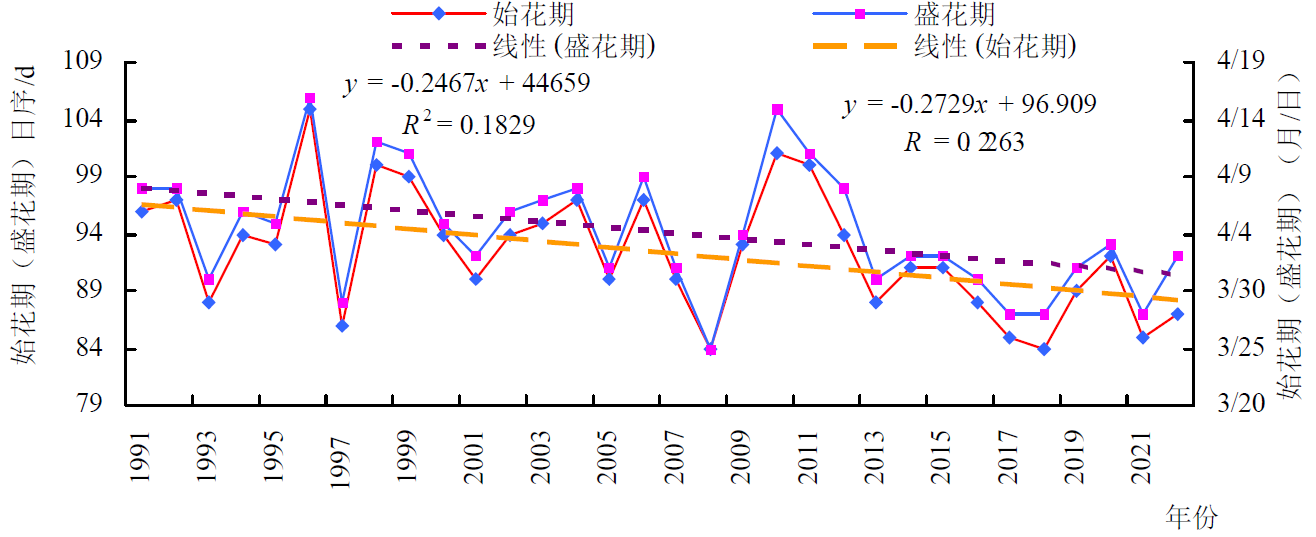
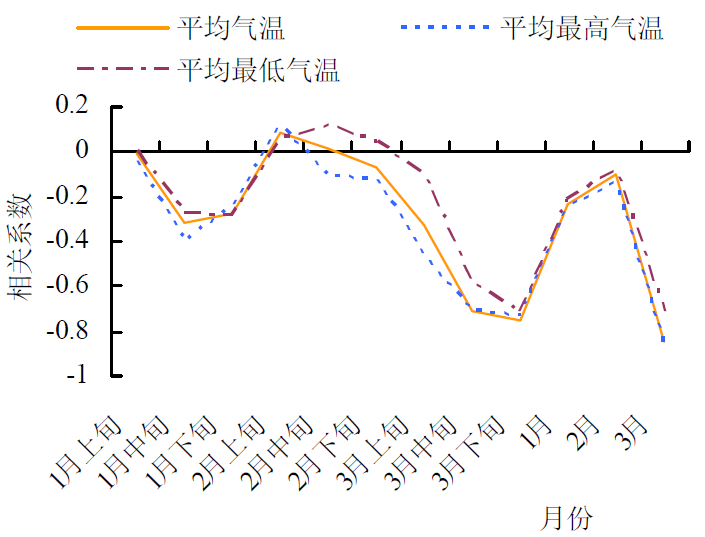
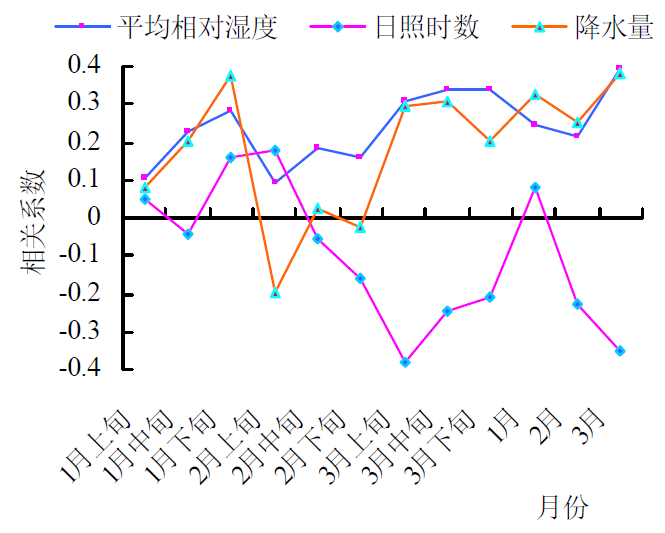
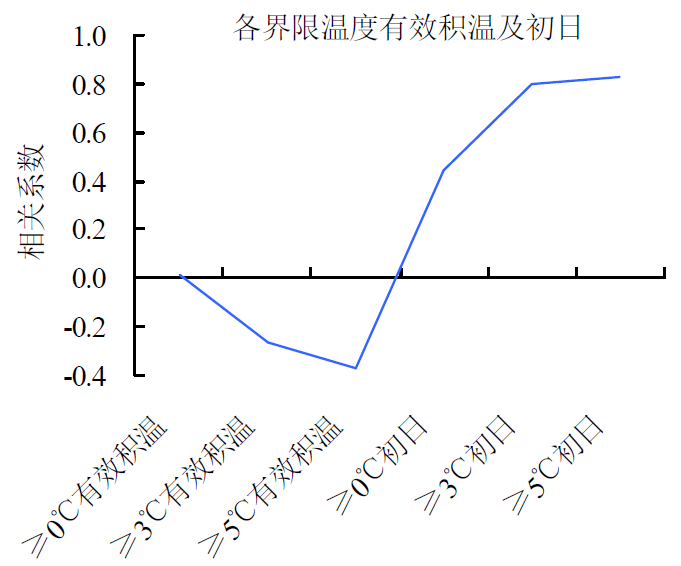
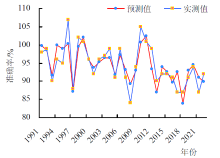
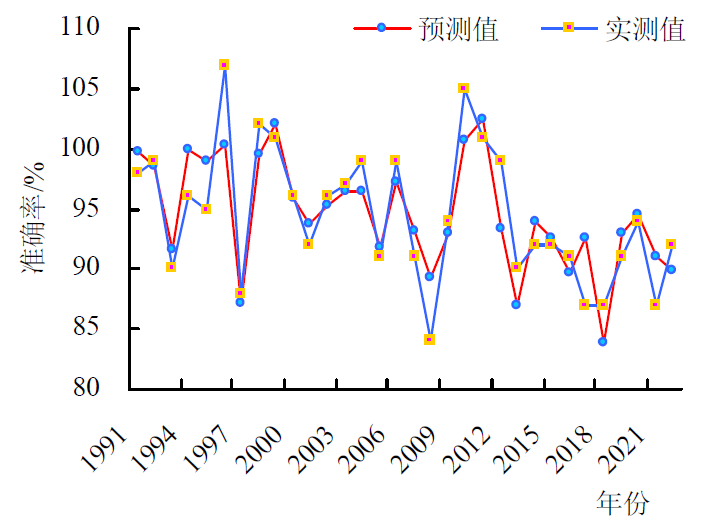
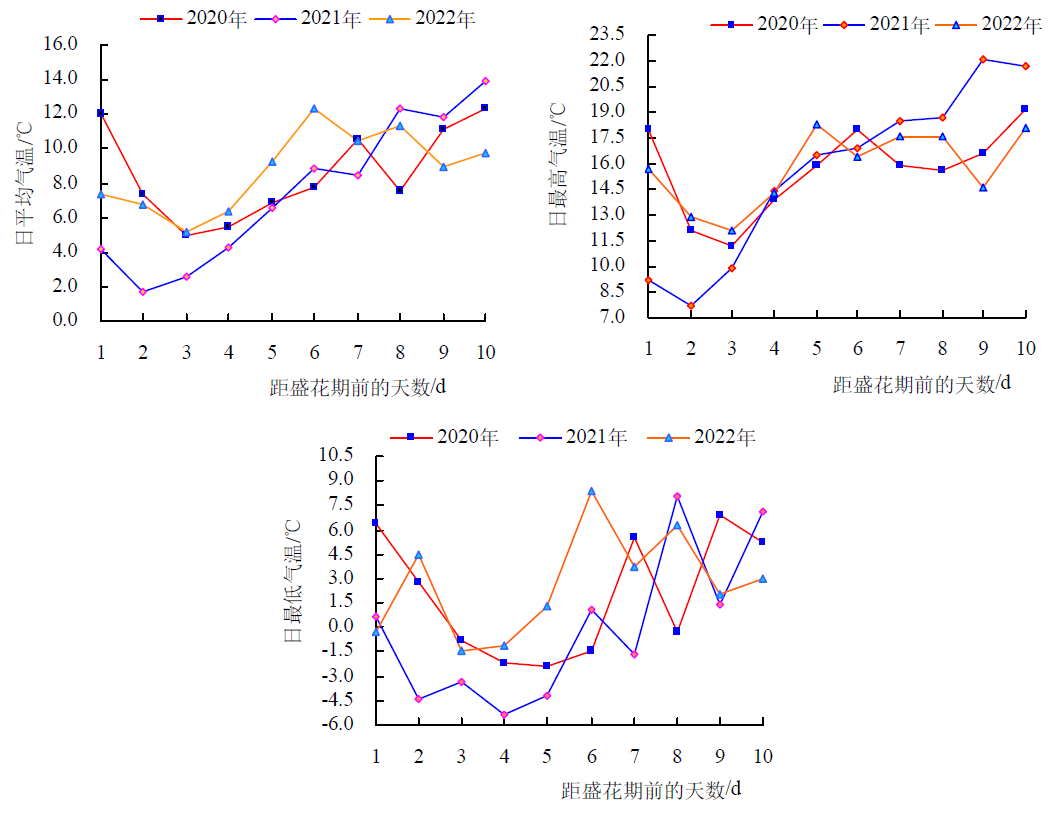
为提高哈密绿洲杏花盛花期(最佳观赏期核心)预报准确性,为旅游管理与游客出行提供科学参考,基于1991—2022年32 a杏花物候资料及同期地面气象观测数据,分析花期年际变化趋势,筛选关键气象影响因子,采用主成分分析构建预报模型并检验。结果表明:(1)花期特征:哈密绿洲杏花平均始花期日序数 92.4(平年为4月2—3日,闰年为4月1—2日),最早最晚始花期相差21 d。平均盛花期日序数 94.5(平年为4月4—5日,闰年为4月3—4日),最早最晚盛花期相差22 d。始花期、盛花期年代际变化呈提前趋势,气候倾向率分别为-2.73 d/10a(r=-0.476, P<0.05)、-2.47 d/10a(r=-0.421, P<0.05)。盛花期的早晚分布具有年代特征,21世纪偏早年居多,20世纪90年代偏晚年集中。(2)气象影响:气象要素对杏花最佳观赏期影响显著,1月中旬、3月上旬平均最高气温,3月中下旬及整月平均气温、平均最高气温、平均最低气温,3月中下旬及整月平均地温,3月上旬日照时数、≥5℃有效积温,与盛花期呈显著或极显著负相关,即这些气象条件数值越高,杏花盛花期越早;而3月平均相对湿度,1月下旬、3月降水量,≥0℃、≥3℃、≥5℃初日与盛花期呈显著或极显著正相关,数值越大,盛花期越晚。(3)模型效果:基于1991—2019年29 a观测资料构建的主成分分析模型(Y=94.828-4.634xR²=0.680),2020—2022年3 a资料进行试报检验,取得了较好的试验效果,盛花期预报值与观测值相差0~2 d的准确率达到62.07%,相差3 d准确率为10.34%。该模型可为哈密绿洲杏花最佳观赏期气象服务提供技术支撑。

关键词: 哈密绿洲杏花, 盛花期, 影响因子, 预报模型

Abstract:

To improve the accuracy of forecasts of the full-bloom period of apricot blossoms in the Hami Oasis, which is the core of the best viewing period, and to provide a scientific basis for tourism management and visitor planning, we used 32-year apricot phenological records (1991-2022) together with concurrent surface meteorological observations. We analyzed the interannual variation in flowering dates, identified key meteorological drivers, and constructed and tested a forecasting model using principal component analysis. The results show that: (1) phenological characteristics: the mean first-flowering day-of-year (DOY) of apricot blossoms in the Hami Oasis is 92.4, corresponding to 2-3 April in common years and 1-2 April in leap years, with a range of 21 days between the earliest and latest first-flowering dates. The mean full-bloom DOY is 94.5, corresponding to 4-5 April in common years and 3-4 April in leap years, with a range of 22 days between the earliest and latest full-bloom dates. Both first-flowering and full-bloom dates exhibit a decadal advancing trend, with climatic tendency rates of -2.73 d per 10 years (r=-0.476, P<0.05) and -2.47 d per 10 years (r =-0.421, P<0.05), respectively. The temporal distribution of early versus late full-bloom dates shows a clear decadal pattern, with more early years occurring in the 21st century and more late years concentrating in the 1990s. (2) Meteorological controls: meteorological factors exert a significant influence on the optimal viewing period of apricot blossoms. The mean maximum air temperature in mid-January and early March; the mean, mean maximum and mean minimum air temperatures in mid-to-late March and for March as a whole; the mean ground temperature in mid-to-late March and for March as a whole; as well as sunshine duration and ≥5℃ effective accumulated temperature in early March all show significant or highly significant negative correlations with the full-bloom date. In other words, higher values of these variables are associated with earlier full bloom. In contrast, mean relative humidity in March; precipitation in late January and in March; and the onset dates of ≥0℃, ≥3℃ and ≥5℃ temperatures exhibit significant or highly significant positive correlations with the full-bloom date, such that higher values or later onset dates correspond to later full bloom. (3) Model performance: based on 29 years of observations from 1991 to 2019, we developed a principal component analysis forecasting model (Y=94.828-4.634x, R2=0.680). The model was validated using data of 2020-2022, yielding satisfactory performance: the forecast accuracy for full-bloom dates within 0-2 days of the observed dates reached 62.07%, and the accuracy for a 3-day difference was 10.34%. This model can provide technical support for meteorological services targeting the optimal viewing period of apricot blossoms in the Hami Oasis.

Key words: apricot flowers in Hami Oasis, blooming period, affecting factors, forecasting model