Welcome to Journal of Agriculture,

Journal of Agriculture ›› 2026, Vol. 16 ›› Issue (4): 79-87.doi: 10.11923/j.issn.2095-4050.cjas2025-0198

Previous Articles     Next Articles

Change Law of Vegetation Cover in Ziwuling Region and Its Climatic Sensitivity Analysis

ZHANG Xuejiao1(), ZHANG Tianfeng2, WANG Juan2, LI Meiyu3, NAN Yingying1   

  1. 1 Meteorological Bureau of Heshui County, Gansu Province, Heshui, Gansu 745400
    2 Meteorological Bureau of Qingyang City, Gansu Province, Qingyang, Gansu 745000
    3 Meteorological Bureau of Zhengning County, Gansu Province, Zhengning, Gansu 745300
  • Received:2025-11-28 Revised:2026-02-12 Online:2026-04-15 Published:2026-04-15

Abstract:

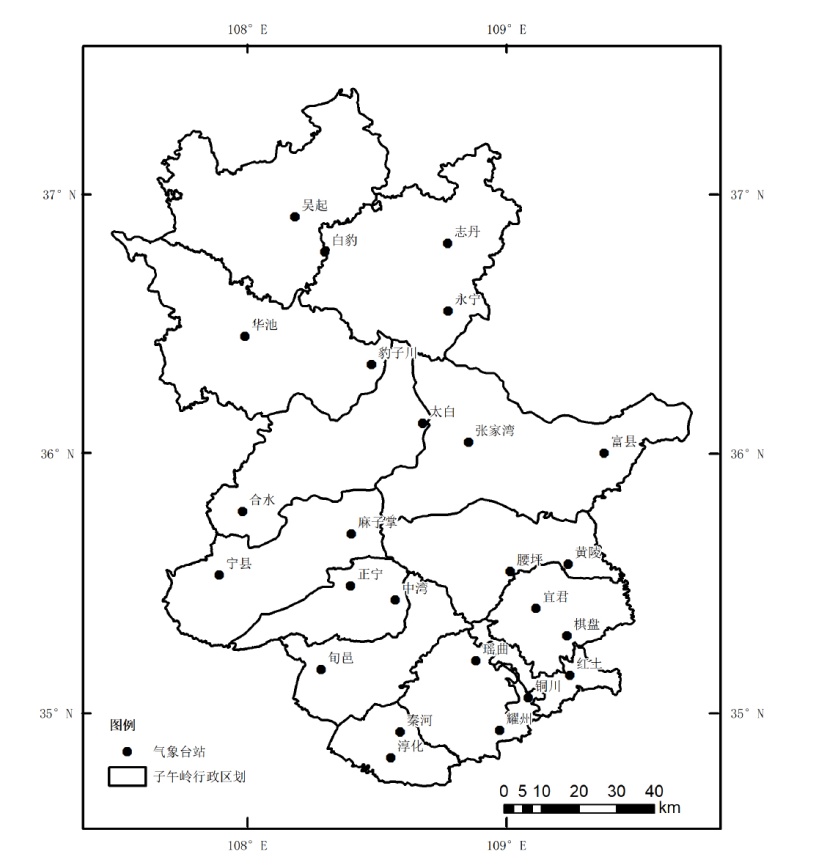
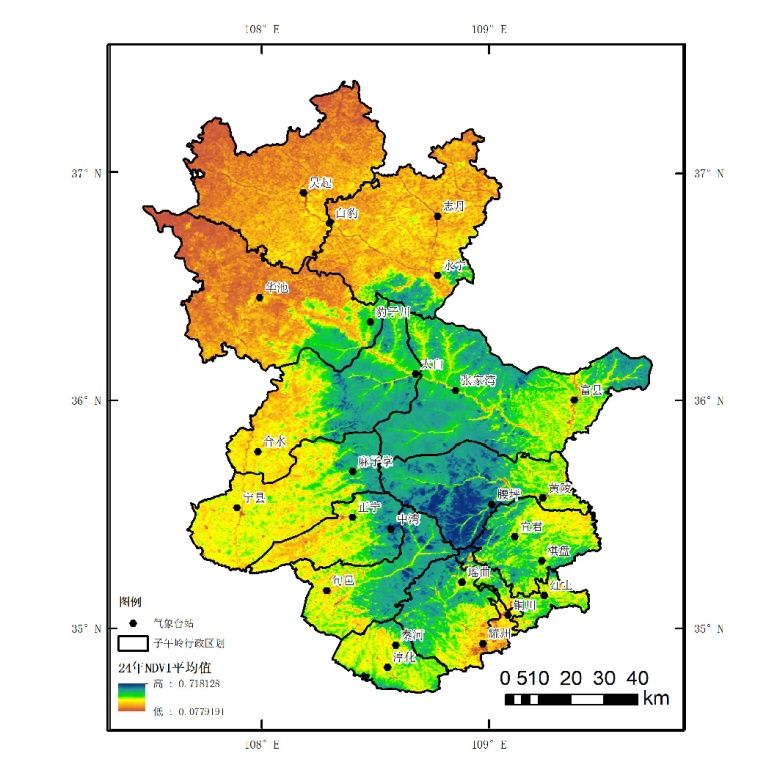
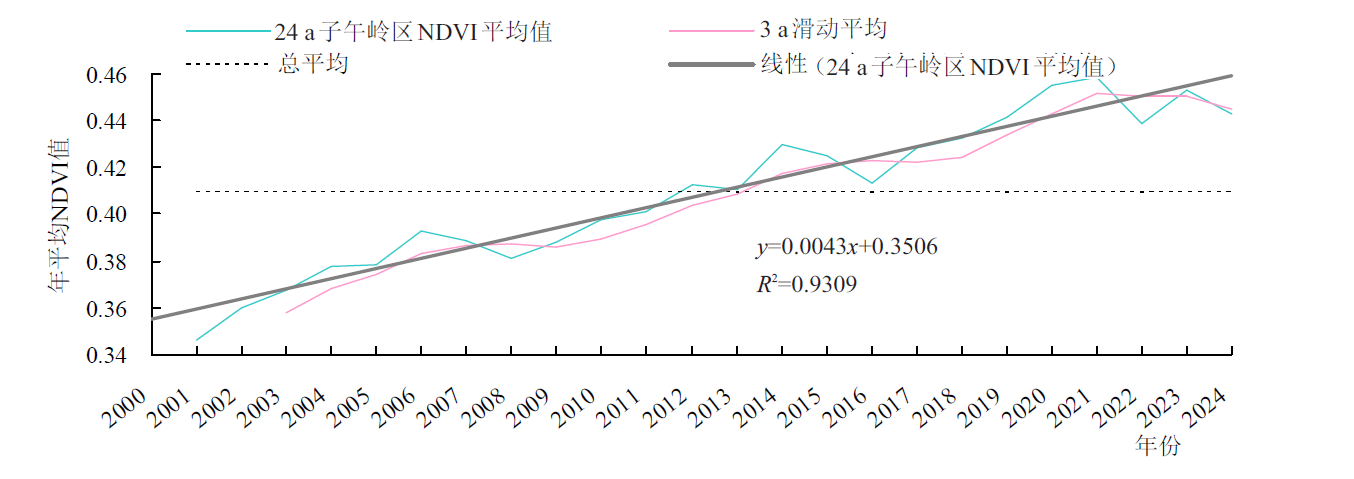
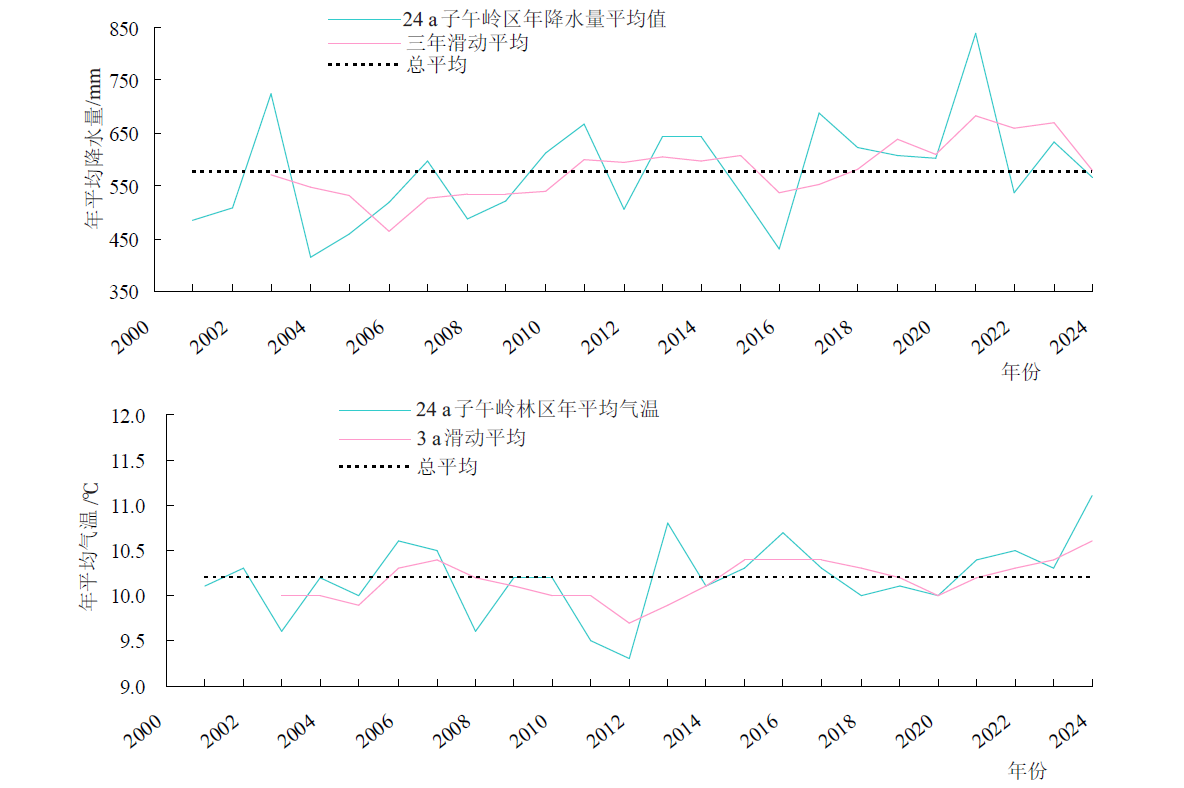
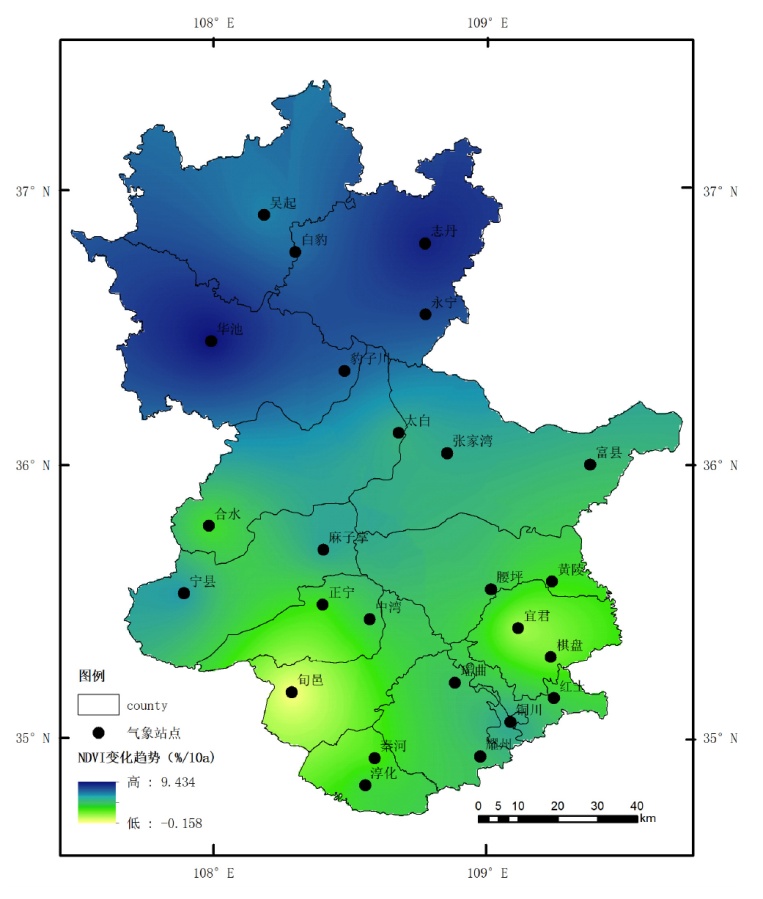
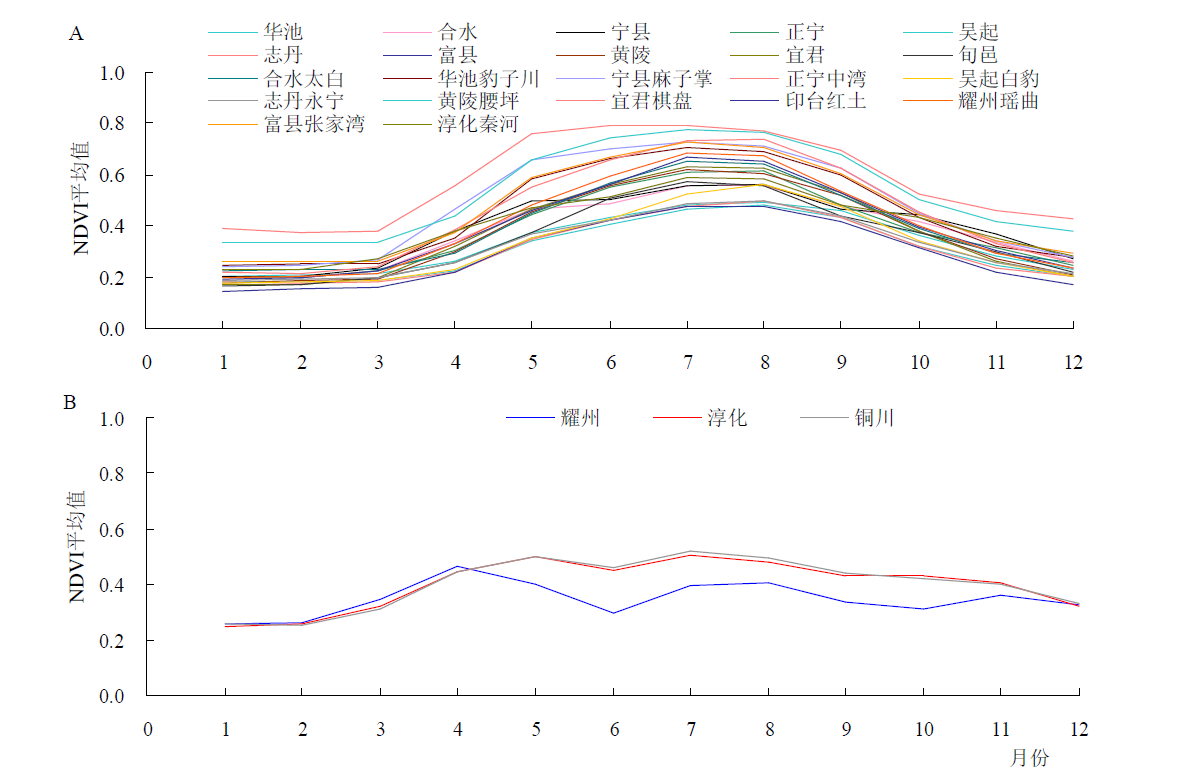
As an important ecological barrier of the Loess Plateau, the response mechanism of vegetation dynamics to climate change in Ziwuling is still unclear. To elucidate the impacts of climate change on regional ecosystems and inform conservation decision-making, this study analyzed spatiotemporal variations in vegetation cover and its sensitivity to hydrothermal factors using MODIS MOD13Q1 NDVI data from 2001-2024 and meteorological records from 25 weather stations. Data preprocessing was conducted via the Google Earth Engine platform, followed by analyses employing linear trend analysis, Kriging interpolation, and Spearman correlation analysis. The results indicate: (1) Spatiotemporal patterns: Over the past 24 years, NDVI in the Ziwuling region exhibited a significant upward trend [4%/10a (p<0.0001)] with pronounced interannual variability. Spatially, mean NDVI followed a "high in the south, low in the north; high along the main ridge, low in surrounding areas" pattern. Notable improvement occurred in the northern sector (Huachi, Zhidan) at rates of 5.0%-9.4%/10a, while localized areas in the south (Xunyi) remained stable or experienced slight degradation. Intra-annual variations predominantly showed a unimodal distribution peaking in July-August, though three southern stations (Yaozhou, Chunhua, Tongchuan) displayed a bimodal pattern with a June decline. (2) Climate sensitivity: At the annual scale, vegetation demonstrated significantly greater sensitivity to precipitation than to temperature. NDVI at five stations (Zhengning, Chunhua, et al.) showed extremely significant positive correlations with annual precipitation (r=0.458 to 0.608), identifying moisture as the primary limiting factor; only Ningxian station exhibited a significant positive correlation with temperature (r=0.436). At the monthly scale, during the peak growing season in July, NDVI at five stations (Yaozhou, Chunhua, et al.) showed extremely significant positive correlations with concurrent precipitation (r=0.549 to 0.654). Temperature responses exhibited spatial heterogeneity: four stations (Chunhua, Yaozhou, Huachi, Zhidan) showed significant negative correlations with concurrent temperature (r=-0.417 to -0.543), indicating dominant immediate hydrothermal responses with negligible lag effects. (3) Mechanistic interpretation: Vegetation changes were driven by both climatic factors and human activities. Precipitation emerged as the key driver of interannual variability, particularly in arid and semi-arid zones, while ecological restoration programs such as the Grain-for-Green Project may have attenuated local climate signals in certain areas. Spatial heterogeneity originated from variations in topography, soil properties, and vegetation types, such as the water-storage capacity of loess deposits to buffer short-term climatic fluctuations. Overall, vegetation cover in Ziwuling has improved, with significant enhancement in the north but localized degradation in the south, highlighting marked spatial heterogeneity. Precipitation constitutes the core climatic driver of vegetation growth, especially during the peak growing season (July), whereas temperature effects are dualistic, capable of either promoting or inhibiting growth. We recommend implementing zoned management strategies, optimizing water resource allocation, enhancing responses to high-temperature stress, and continuing ecological restoration efforts. This study provides a scientific foundation for ecosystem conservation in Ziwuling; future research should integrate high-resolution data with ecological models to deepen mechanistic understanding.

Key words: vegetation cover, spatio-temporal distribution, climate sensitivity, forest conservation, Ziwuling mountains, Loess Plateau, ecological barrier