Welcome to Journal of Agriculture,

Journal of Agriculture ›› 2026, Vol. 16 ›› Issue (3): 73-79.doi: 10.11923/j.issn.2095-4050.cjas2024-0222
Previous Articles Next Articles
YE Tingyun1( ), MA Liya1, LU Shenggao2()
Received:2024-12-12
Revised:2025-05-14
Online:2026-03-20
Published:2026-03-19
YE Tingyun, MA Liya, LU Shenggao. Analysis of Soil Structure and Microbial Community of Sugarcane National Geographical Indication Production Area in Taoshan of Ruian[J]. Journal of Agriculture, 2026, 16(3): 73-79.
Add to citation manager EndNote|Ris|BibTeX
URL: http://nxxb.caass.org.cn/EN/10.11923/j.issn.2095-4050.cjas2024-0222
| 指标 | LS | MS | HS |
|---|---|---|---|
| WSA/% | 65.92±10.76 c | 86.06±5.24 b | 93.61EMBED Word.Document.8 EMBED Excel.Sheet.8 EMBED Excel.Sheet.8 ±5.46 a |
| MWD/mm | 1.36±0.36 c | 2.57±0.45 b | 3.84±0.49 a |
| GMD/mm | 0.68±0.29 c | 1.5±0.42 b | 2.85±0.75 a |
| 指标 | LS | MS | HS |
|---|---|---|---|
| WSA/% | 65.92±10.76 c | 86.06±5.24 b | 93.61EMBED Word.Document.8 EMBED Excel.Sheet.8 EMBED Excel.Sheet.8 ±5.46 a |
| MWD/mm | 1.36±0.36 c | 2.57±0.45 b | 3.84±0.49 a |
| GMD/mm | 0.68±0.29 c | 1.5±0.42 b | 2.85±0.75 a |
| 指标 | LS | MS | HS |
|---|---|---|---|
| pH | 4.18±0.56 b | 4.60±0.61 a | 4.73±0.48 a |
| 有机质/(g/kg) | 17.33±5.7 b | 18.47±7.98 b | 22.26±6.09 a |
| 速效磷/(mg/kg) | 4.63±1.83 a | 5.38±2.83 a | 5.26±2 a |
| 碱解氮/(mg/kg) | 216.36±52 a | 181.27±33.92 a | 278.13±45.52 a |
| 速效钾/(mg/kg) | 91.44±55.53 a | 117.69±79.92 a | 84.43±49.25 a |
| 砂粒/% | 40.11±15.41 a | 37.17±10.17 a | 30.38±13.74 b |
| 粉粒/% | 40.6±11.76 a | 37.56±9.72 a | 47.4±13.56 a |
| 黏粒/% | 19.29±3.65 b | 25.27±10.07 a | 22.22±9.02 ab |
| 土壤含水率/% | 22.72±1.32 b | 26.43±4.74 a | 29.15±7.9 a |
| 田间持水量/% | 31.74±5.42 a | 33.69±4.01 a | 32.83±4.96 a |
| 土壤容重/(g/cm3) | 1.33±0.16 a | 1.29±0.06 a | 1.31±0.18 a |
| 指标 | LS | MS | HS |
|---|---|---|---|
| pH | 4.18±0.56 b | 4.60±0.61 a | 4.73±0.48 a |
| 有机质/(g/kg) | 17.33±5.7 b | 18.47±7.98 b | 22.26±6.09 a |
| 速效磷/(mg/kg) | 4.63±1.83 a | 5.38±2.83 a | 5.26±2 a |
| 碱解氮/(mg/kg) | 216.36±52 a | 181.27±33.92 a | 278.13±45.52 a |
| 速效钾/(mg/kg) | 91.44±55.53 a | 117.69±79.92 a | 84.43±49.25 a |
| 砂粒/% | 40.11±15.41 a | 37.17±10.17 a | 30.38±13.74 b |
| 粉粒/% | 40.6±11.76 a | 37.56±9.72 a | 47.4±13.56 a |
| 黏粒/% | 19.29±3.65 b | 25.27±10.07 a | 22.22±9.02 ab |
| 土壤含水率/% | 22.72±1.32 b | 26.43±4.74 a | 29.15±7.9 a |
| 田间持水量/% | 31.74±5.42 a | 33.69±4.01 a | 32.83±4.96 a |
| 土壤容重/(g/cm3) | 1.33±0.16 a | 1.29±0.06 a | 1.31±0.18 a |
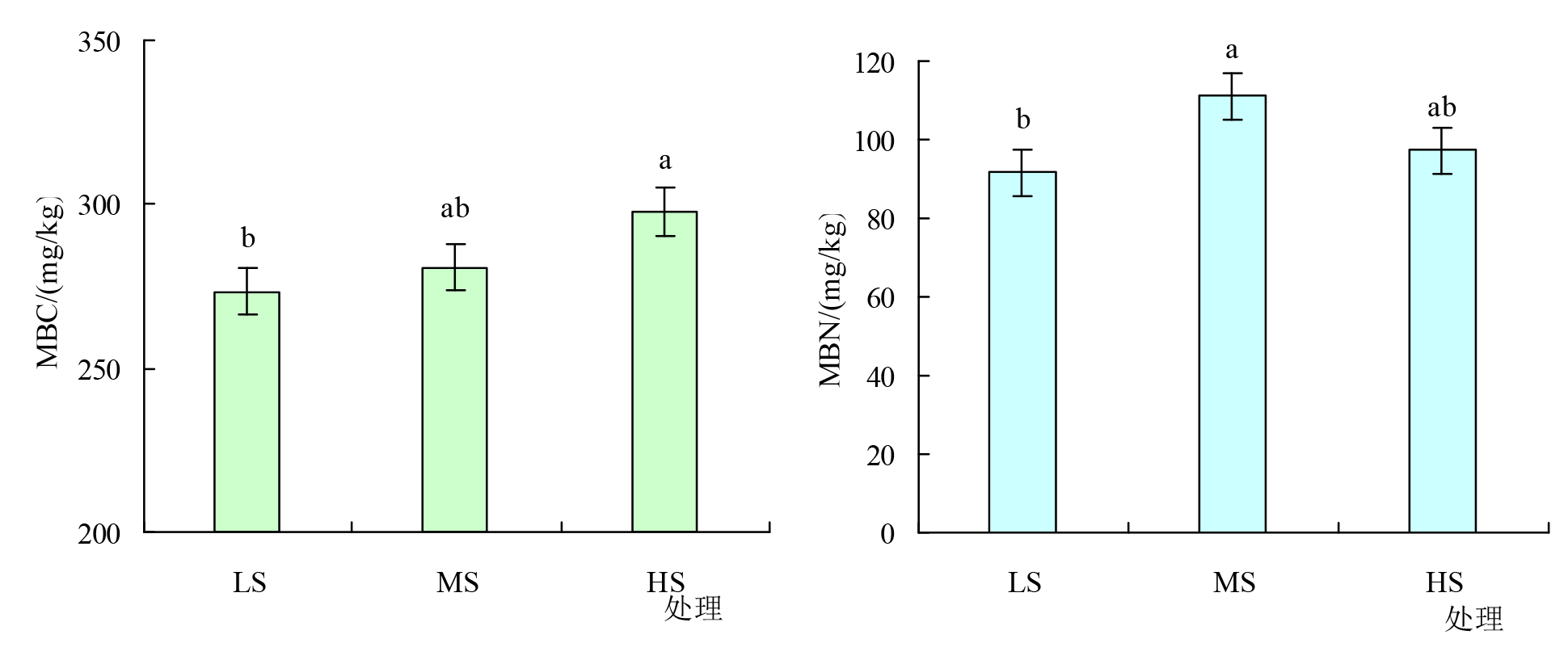
| LS | MS | HS | ||
|---|---|---|---|---|
| 真菌 | Chao1 | 880.48±126 a | 824.20±206 ab | 710.63±200 b |
| Shannon | 4.74±0.6 b | 5.09±0.7 a | 5.01±0.63 a | |
| Simpson | 0.11±0.04 a | 0.09±0.04 b | 0.08±0.04 b | |
| 细菌 | Chao1 | 5462.00±946.86 a | 5135.86±126.40 b | 5401.94±797.12 a |
| Shannon | 8.83±0.92 b | 9.04±0.79 a | 9.30±0.6 a | |
| Simpson | 0.019±0.006 a | 0.012±0.004 b | 0.008±0.004 b |
| LS | MS | HS | ||
|---|---|---|---|---|
| 真菌 | Chao1 | 880.48±126 a | 824.20±206 ab | 710.63±200 b |
| Shannon | 4.74±0.6 b | 5.09±0.7 a | 5.01±0.63 a | |
| Simpson | 0.11±0.04 a | 0.09±0.04 b | 0.08±0.04 b | |
| 细菌 | Chao1 | 5462.00±946.86 a | 5135.86±126.40 b | 5401.94±797.12 a |
| Shannon | 8.83±0.92 b | 9.04±0.79 a | 9.30±0.6 a | |
| Simpson | 0.019±0.006 a | 0.012±0.004 b | 0.008±0.004 b |
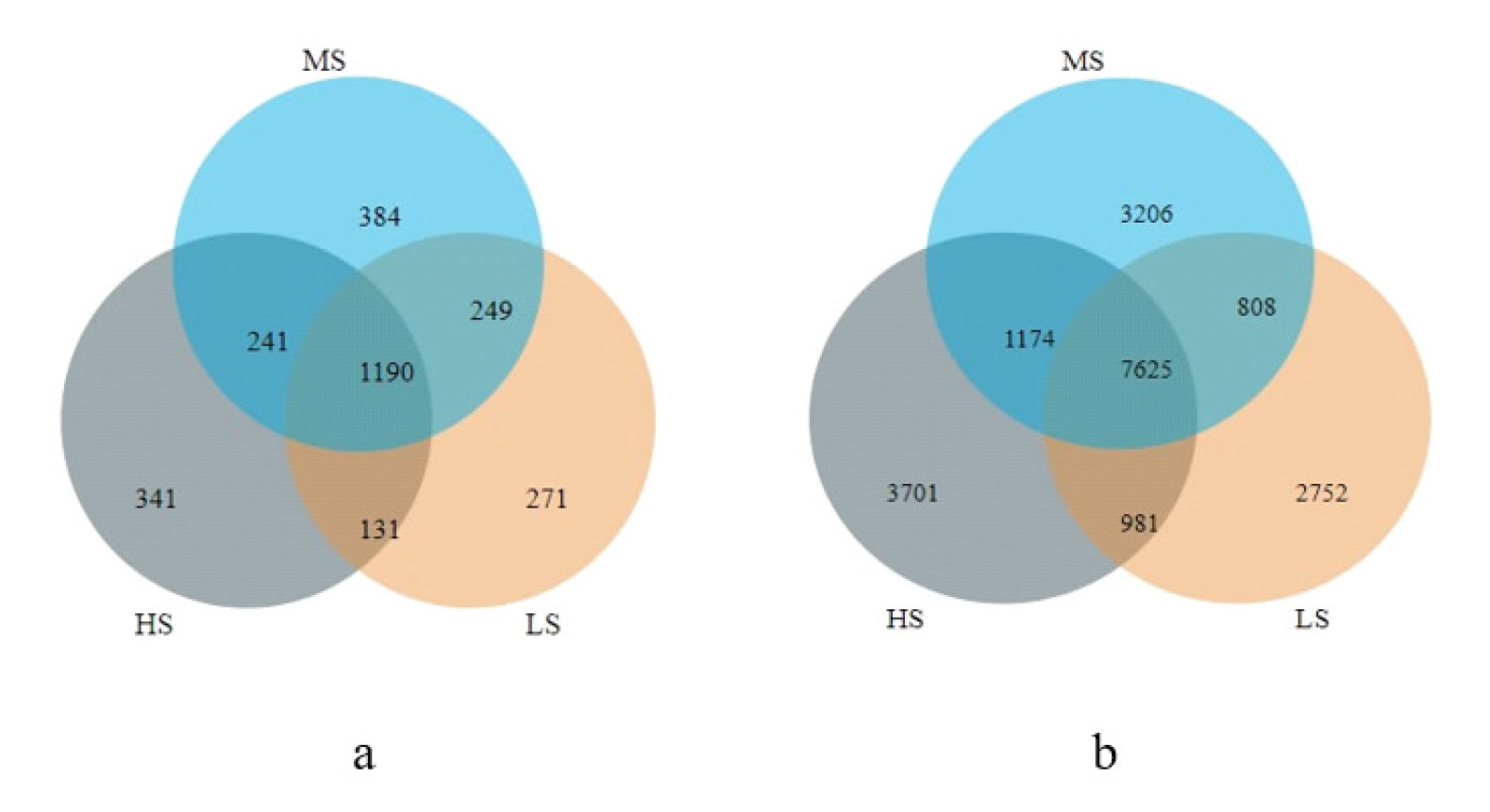
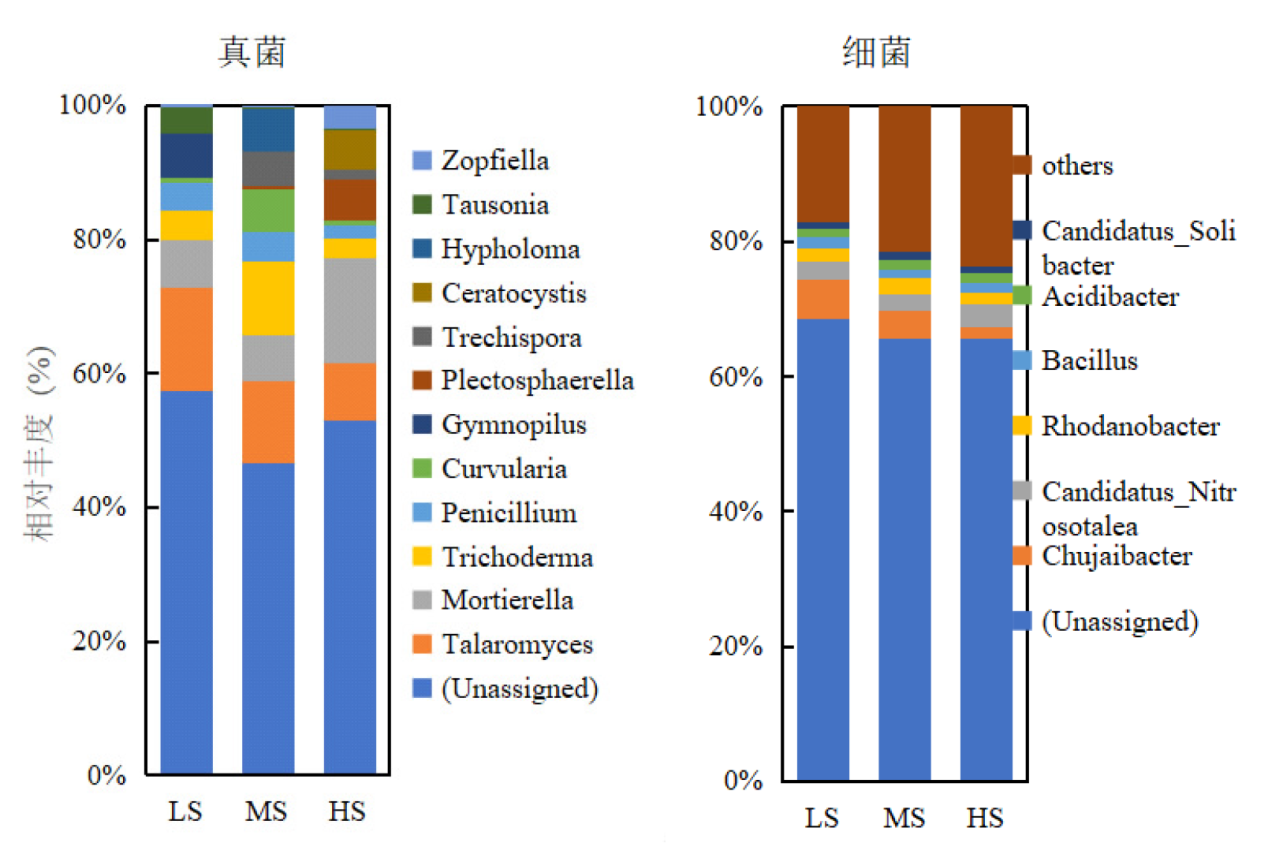
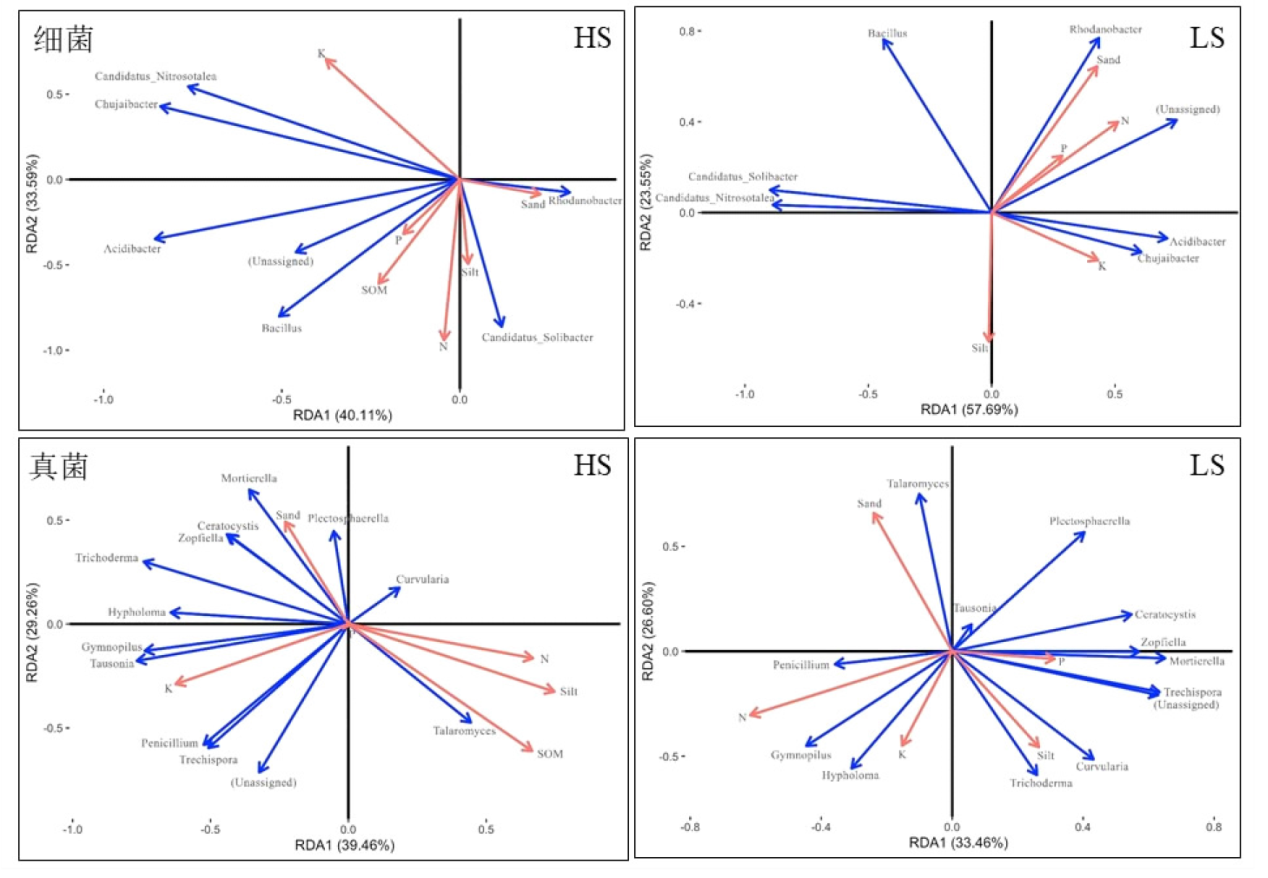
| [1] |
doi: 10.1016/j.geoderma.2016.01.004 URL |
| [2] |
doi: 10.1016/j.still.2019.104383 URL |
| [3] |
|
| [4] |
doi: 10.1016/j.geodrs.2017.10.001 URL |
| [5] |
doi: 10.1016/j.geoderma.2017.11.009 URL |
| [6] |
刘晓利, 樊剑波, 蒋瑀霁. 不同施肥制度甘蔗地土壤养分对微生物群落结构的影响[J]. 生态学报, 2014, 34(18):5242-5248.
|
| [7] |
刘洪, 韦本辉, 党柯柯, 等. 粉垄耕作对甘蔗土壤微生物群落的影响[J]. 热带作物学报, 2022, 43(3):597-605.
doi: 10.3969/j.issn.1000-2561.2022.03.019 |
| [8] |
黄太庆, 谭裕模, 江泽普, 等. 甘蔗种植对土壤团聚体及有机碳分布特征的影响[J]. 西南农业学报, 2019, 32(4):860-865.
|
| [9] |
doi: 10.1016/j.apsoil.2019.04.027 URL |
| [10] |
doi: 10.1016/j.apsoil.2010.08.015 URL |
| [11] |
张爱加, 周明明, 林文雄. 不同种植模式对甘蔗根际土壤生物学特性的影响[J]. 植物营养与肥料学报, 2013, 19(6):1525-1532.
|
| [12] |
周灵芝, 黄渝岚, 周佳, 等. 粉垄耕作和间作绿肥还田对甘蔗不同生长时期土壤微生物群落功能多样性的影响[J]. 西南农业学报, 2023, 36(12):2640-2650.
|
| [13] |
何瑞清, 王百群, 张燕. 耕作与施肥对甘蔗地土壤微生物量碳、氮的影响[J]. 水土保持研究, 2015, 22(5):118-121.
|
| [14] |
鲍士旦. 土壤农化分析(第三版)[M]. 北京: 中国农业出版社, 2000.
|
| [15] |
doi: 10.1016/0038-0717(87)90052-6 URL |
| [16] |
|
| [17] |
doi: 10.1128/AEM.04031-15 URL |
| [18] |
doi: 10.1007/s12275-015-5136-y URL |
| Viewed | ||||||
|
Full text |
|
|||||
|
Abstract |
|
|||||
