欢迎访问《农学学报》,

农学学报 ›› 2026, Vol. 16 ›› Issue (5): 37-42.doi: 10.11923/j.issn.2095-4050.cjas2025-0068

• 林学 园艺 园林 食用菌 • 上一篇    下一篇

园林废弃枝叶覆盖厚度对土壤细菌群落的影响研究

刘凌霄()   

  1. 保定市龙潭公园, 河北保定 071051
  • 收稿日期:2025-03-13 修回日期:2025-11-28 出版日期:2026-05-20 发布日期:2026-05-15
  • 作者简介:

    刘凌霄,女,1973年出生,河北保定人,高级工程师,本科,研究方向:园林。通信地址:071052 河北省保定市陵园路30号 保定龙潭公园,E-mail:

  • 基金资助:
    河北省农林科学院现代农业科技创新工程“园林生态植被特征及影响因素研究”(2020-11-05)

Study on Effect of Thickness of Abandoned Branches and Leaves Coverage in Gardens on Soil Bacterial Communities

LIU Lingxiao()   

  1. Longtan Park, Baoding City, Baoding, Hebei 071051
  • Received:2025-03-13 Revised:2025-11-28 Online:2026-05-20 Published:2026-05-15

摘要:

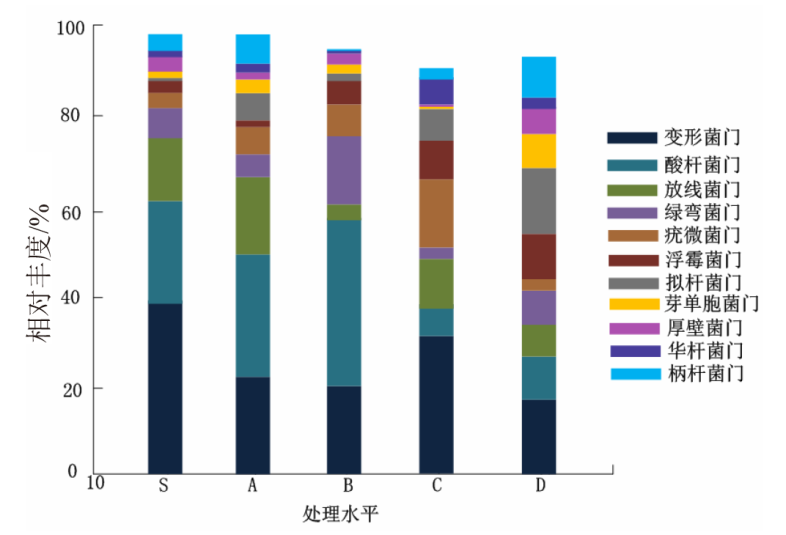
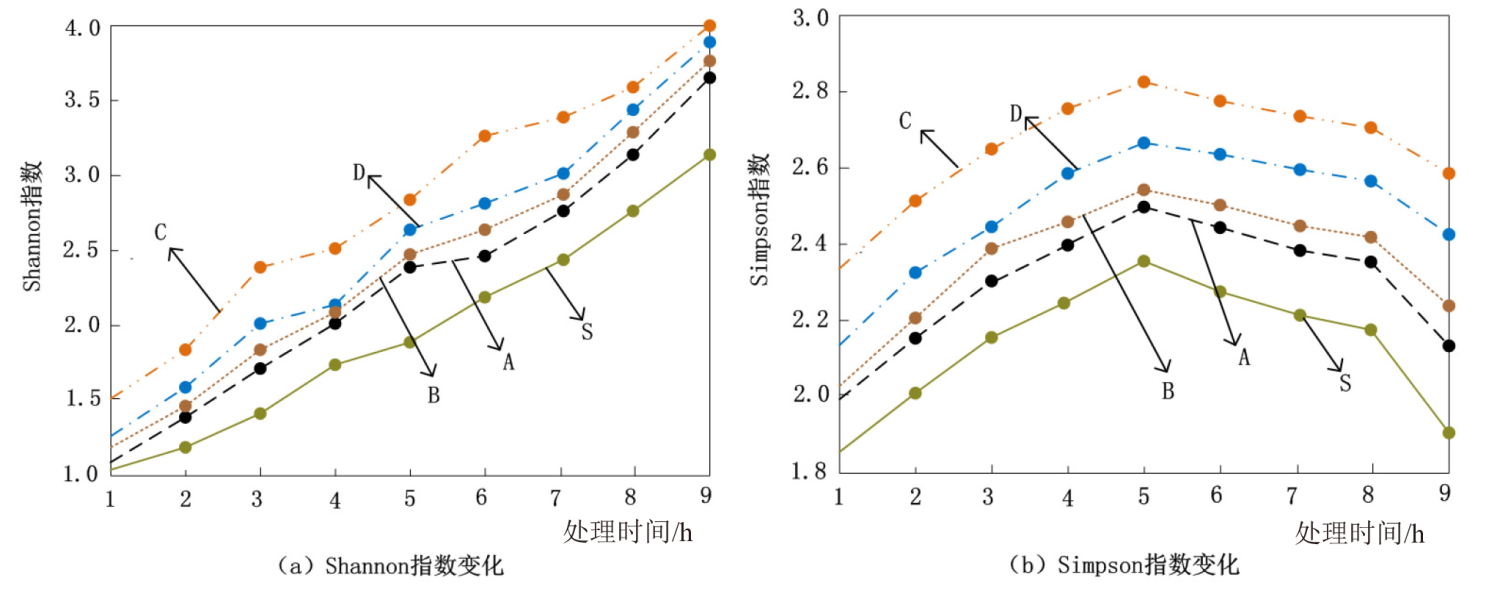
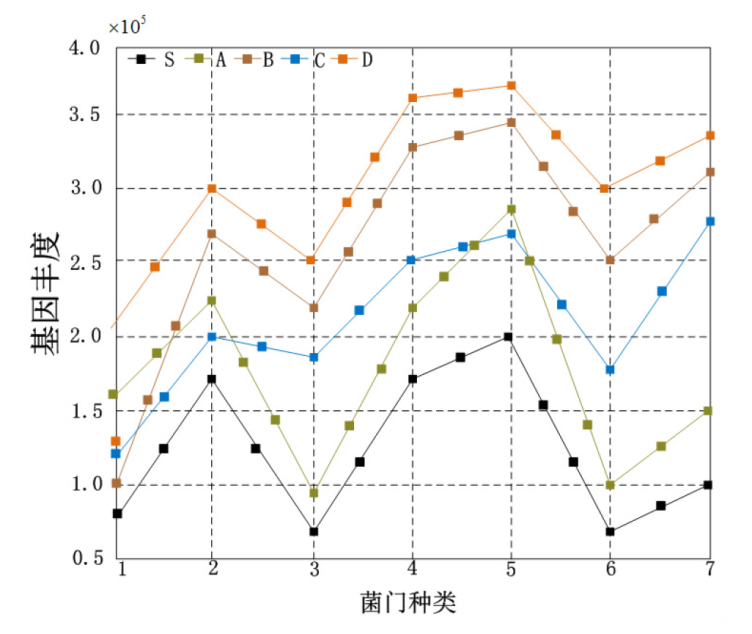
探究不同厚度的园林废弃物枝叶对土壤细菌群落组成和多样性的影响,为城市园林废弃物资源化利用和土壤生态管理提供科学依据。以某市公园土壤为研究对象,设置裸土对照组(S)及3 cm (A)、5 cm (B)、10 cm (C)和15 cm (D) 4个枝叶覆盖厚度处理,通过测定土壤理化性质及高通量测序技术,分析细菌群落结构、多样性及功能差异。结果表明:与对照组(S)相比,A~D 4个处理水平下的土壤pH、有机质、全氮、速效钾和有效磷等含量均有所增加,表明枝叶覆盖对土壤理化性质产生了显著的影响;随着枝叶覆盖厚度的增加,土壤中的细菌物种分类数和序列数总体呈现增加的趋势,细菌多样性较为丰富。在所有处理水平上,Shannon指数随着处理时间的延长呈上升趋势,Simpson指数先增加后下降。经过不同枝叶厚度处理水平的土壤各菌门基因丰度均高于对照组。在不同枝叶覆盖厚度处理条件下,土壤细菌种类数量和优势细菌种类具有明显差异。覆盖10 cm枝叶的处理组(C)显示出最高的Shannon指数和Simpson指数,土壤细菌群落中的优势物种最为稳定。当枝叶覆盖厚度为15 cm (D)时,各类型菌门的基因丰度均达到最大值,处于2.0×10⁵以上。在对照组(S)中,假单胞菌占主导地位,而在较厚的枝叶覆盖层(B、C和D组)中,链霉菌和根瘤菌等细菌逐渐成为优势种类。研究表明,适度覆盖园林中废弃枝叶(5~10 cm)可以促进土壤细菌群落的丰富性和多样性,而过度覆盖可能会对细菌存活产生不利影响。

关键词: 园林, 废弃枝叶, 覆盖厚度, 土壤细菌群落, 理化性质

Abstract:

The study aims to explore the effects of different thicknesses of garden waste branches and leaves on the composition and diversity of soil bacterial communities, and to provide a scientific basis for the resource utilization of urban garden waste and soil ecological management. A controlled experimental design was adopted, with bare soil without garden waste branches and leaves as the control group (S), and four treatment groups with different coverage thicknesses were set up, including 3 cm (A), 5 cm (B), 10 cm (C) and 15 cm (D). High-throughput sequencing technology was used to sequence and analyze the bacterial communities in soil samples from different treatment groups, comparing the differences in bacterial structure, basic functions, and composition distribution among the groups. The results showed that compared with the control group (S), the soil pH value, organic matter content, total nitrogen, available potassium and available phosphorus content increased in all four treatment groups (A to D), indicating that branch and leaf coverage had a significant impact on soil physicochemical properties. With increasing coverage thickness, the number of bacterial species classifications and sequence counts showed an overall increasing trend, demonstrating relatively rich bacterial diversity. Across all treatment levels, the Shannon index increased over time, while the Simpson index initially increased and then decreased. The gene abundance of various bacterial phyla in all treatment groups was higher than that in the control group. Significant differences were observed in both the quantity of bacterial species and the composition of dominant species under different coverage thicknesses. The treatment group with 10 cm coverage (C) showed the highest Shannon and Simpson indices, with the most stable dominant species in the soil bacterial community. At 15 cm coverage (D), the gene abundance of all bacterial phyla reached maximum levels, exceeding 2.0×10⁵. In the control group (S), Pseudomonas was the dominant genus, while in groups with thicker coverage (B, C and D), bacteria such as Streptomyces and Rhizobium gradually became dominant. The study demonstrates that moderate garden waste coverage (5-10 cm) effectively promotes soil bacterial community richness and diversity, whereas excessive coverage may adversely affect bacterial survival.

Key words: gardens, abandoned branches and leaves, coverage thickness, soil bacterial community, physical and chemical properties

中图分类号: