欢迎访问《农学学报》,

农学学报 ›› 2026, Vol. 16 ›› Issue (5): 26-31.doi: 10.11923/j.issn.2095-4050.cjas2025-0033

• 植物保护 • 上一篇    下一篇

褐家鼠和黄胸鼠种群特征比较研究:以贵州三都县为例

艾祯仙(), 白明琼   

  1. 贵州省三都水族自治县种植业发展中心, 贵州三都 558100
  • 收稿日期:2025-02-07 修回日期:2025-06-26 出版日期:2026-05-20 发布日期:2026-05-15
  • 作者简介:

    艾祯仙,女,1985年出生,高级农艺师,主要从事植物保护技术推广工作。通信地址:558100 贵州省三都县三合街道城北农业大楼三都水族自治县种植业发展中心,E-mail:

  • 基金资助:
    贵州省高层次创新型人才培养项目“贵州省鼠害人才团队持续性培养期项目”(黔科合人才[2015]4019号); 遵义市首批市级人才基地建设项目“贵州省农区鼠害绿色防控技术应用人才基地项目”(遵委[2019]69号)

Comparative Study on Population Characteristics of Rattus norvegicus and Rattus tanezumi: A Case Study of Sandu County, Guizhou Province

AI Zhenxian(), BAI Mingqiong   

  1. Sandu Shui Autonomous County Planting Industry Development Center of Guizhou Province, Sandu, Guizhou 558100
  • Received:2025-02-07 Revised:2025-06-26 Online:2026-05-20 Published:2026-05-15

摘要:

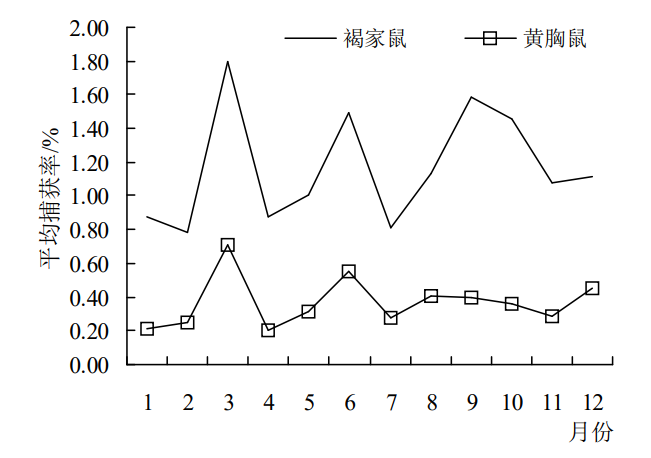
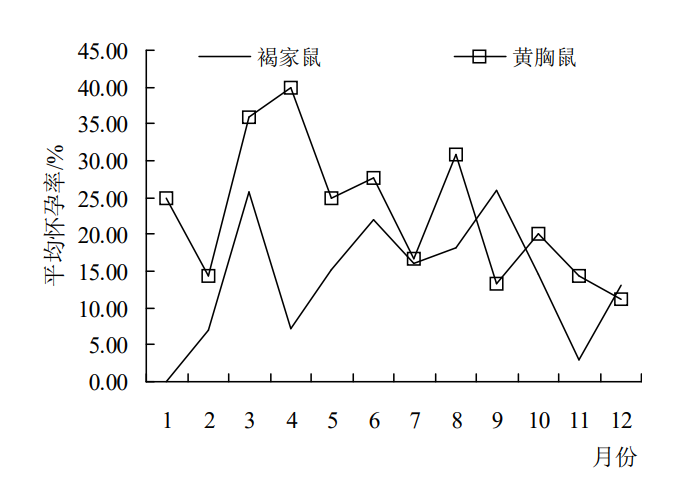
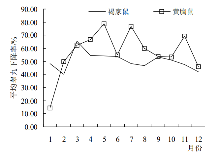
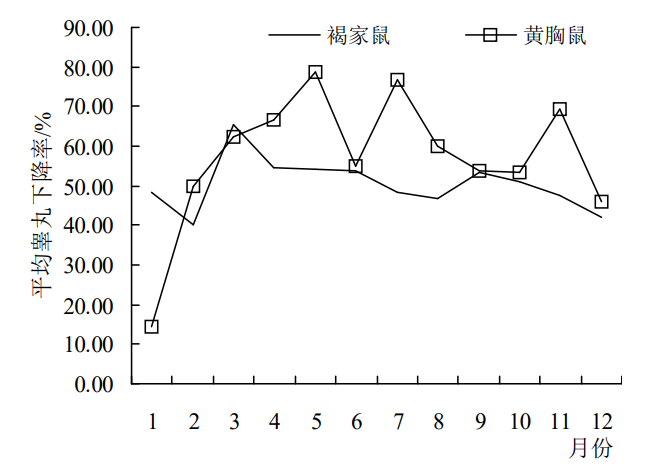
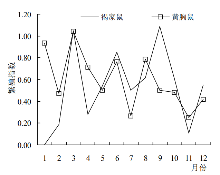
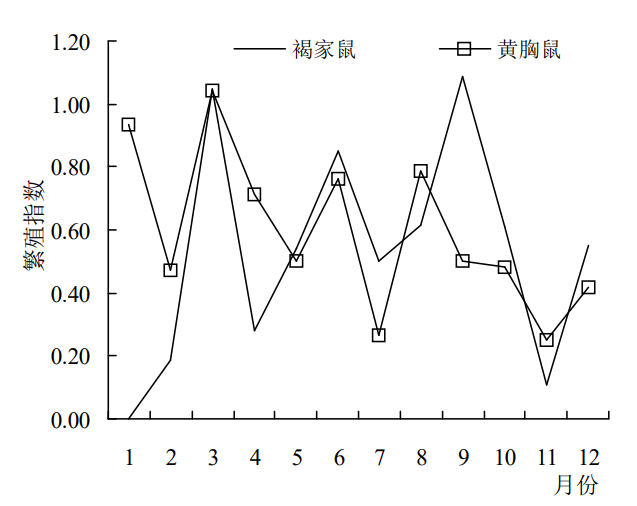
为比较褐家鼠和黄胸鼠种群特征变化规律,为其种群数量预测预报及科学防控提供理论依据。于每月上中旬采用夹夜法,对住宅区、稻田区、旱地耕作区鼠情进行调查,对贵州省三都县2012—2024年农区鼠情监测到的褐家鼠及黄胸鼠进行比较分析研究。结果表明,褐家鼠平均体重为(98.95±42.37) g,黄胸鼠平均体重为(84.95±31.95)g,褐家鼠体重、胴体重、体长显著高于黄胸鼠,黄胸鼠尾长及耳高显著高于褐家鼠。褐家鼠平均捕获率为1.17%,明显高于黄胸鼠平均捕获率0.37%,褐家鼠在3月、6月、9月出现3个种群数量高峰,黄胸鼠在3月、6月出现2个种群数量高峰。褐家鼠和黄胸鼠在当地的繁殖能力有所不同,褐家鼠平均怀孕率为15.69%,低于黄胸鼠的平均怀孕率23.57%,褐家鼠平均胎仔数为7.89只,高于黄胸鼠平均胎仔数5.88只,褐家鼠平均睾丸下降率为51.52%,低于黄胸鼠平均睾丸下降率59.04%,褐家鼠平均繁殖指数为0.6097,低于黄胸鼠平均繁殖指数0.6340。褐家鼠平均肥满度为(2.65±0.40) g/cm3,低于黄胸鼠平均肥满度为(2.78±0.45) g/cm3。由此可见,体重、体长、尾长、耳高等形态特征可作为鉴定区别褐家鼠和黄胸鼠的参考依据,每年3月、6月、9月是当地褐家鼠和黄胸鼠防治的关键时期。

关键词: 褐家鼠, 黄胸鼠, 形态特征, 繁殖参数, 肥满度, 比较

Abstract:

The study aims to compare the population characteristics of Rattus norvegicus and Rattus tanezumi, and provide theoretical basis for their population prediction and scientific prevention and control. In the first half of every month, the rat situation in residential areas, paddy fields and dry farming areas was investigated by night trapping method, and the rat situation of R. norvegicus and R. tanezumi in agricultural areas of Sandu County, Guizhou Province from 2012 to 2024 was compared and analyzed. The results showed that the average weight of R. norvegicus was (98.95±42.37) g, while that of R. tanezumi was (84.95±31.95) g. The weight, carcass weight and body length of R. norvegicus were significantly higher than that of R. tanezumi. The average capture rate of R. norvegicus was 1.17%, which was significantly higher than that of R. tanezumi (0.37%). R. norvegicus had three population peaks in March, June and September, and R. tanezumi had two population peaks in March and June. The reproductive ability of R. norvegicus and R. tanezumi was different in the local area. The average pregnancy rate of R. norvegicus was 15.69%, which was lower than that of R. tanezumi by 23.57%. The average number of offspring of R. norvegicus was 7.89, which was higher than that of R. tanezumi by 5.88. The average testicular decline rate of R. norvegicus was 51.52%, which was lower than that of R. tanezumi by 59.04%. The average fatness of R. norvegicus was 2.65±0.40 g/cm3, which was lower than that of R. tanezumi (2.78±0.45) g/cm3. It can be seen that the morphological characteristics of body weight, body length, tail length and ear height can be used as a reference for identifying and distinguishing R. norvegicus and R. tanezumi, and March, June and September are the key periods for the control of R. norvegicus and Rattus flavipectus.

Key words: Rattus norvegicus, Rattus tanezumi, morphological characteristics, reproductive parameters, fatness, compare

中图分类号: